|
TLDR
AI gateways centralize how applications access AI models, replacing fragmented direct integrations with a single control layer for security, routing, and governance.
Direct LLM API usage does not scale safely, especially when multiple teams, models, and sensitive data are involved.
AI gateways enforce consistent security and privacy guarantees, including encryption, access control, auditability, and policy enforcement across all AI traffic.
Enterprise AI gateways reduce vendor lock-in, allowing teams to switch or add models without rewriting application logic.
Platforms like OLLM provide production-ready AI infrastructure that combines zero data retention, hardware-backed execution, and verifiable attestation for privacy-critical workloads.
What Are AI Gateways?
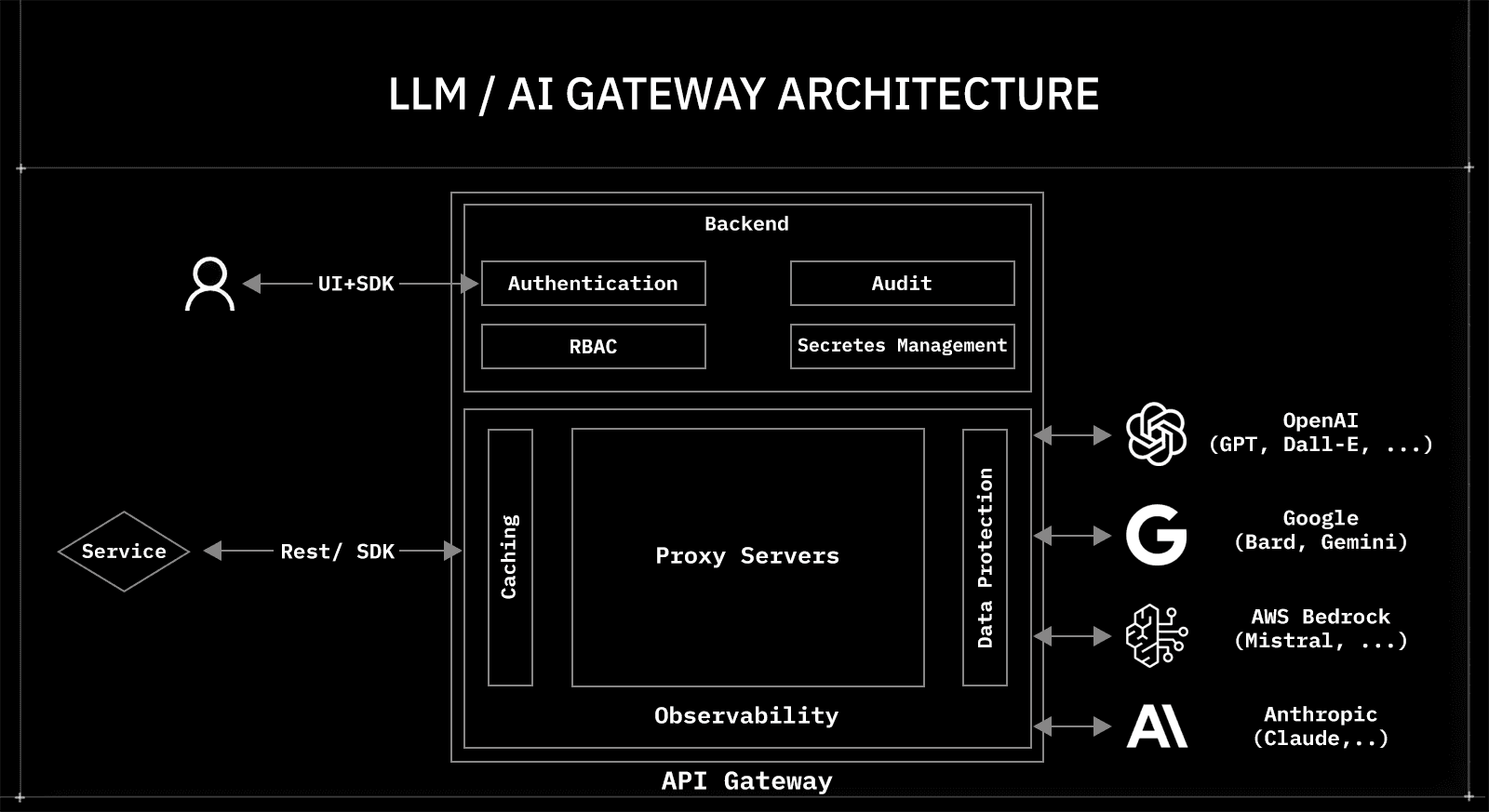
AI gateways are infrastructure layers that manage how applications access and use AI models. Instead of letting every service connect directly to a large language model provider, an AI gateway becomes the single entry point for all AI requests. Applications send prompts to the gateway, which decides where those requests go and how they are handled.
At a basic level, an AI gateway sits between three things:
Applications that need AI capabilities
One or more LLM providers or inference backends
Enterprise policies around security, privacy, and usage
This placement matters. Without a gateway, each application embeds its own logic for authentication, provider selection, logging, and data handling. Over time, this creates inconsistent behavior and hidden risk. With a gateway, those concerns are consolidated into a single shared layer that can be managed and audited centrally.
In practice, AI gateways handle several core functions that direct integrations cannot:
Request routing: selecting models based on policy, cost, or performance
Security enforcement: managing credentials, encryption, and access control
Usage visibility: capturing logs and metrics across all AI traffic
Policy consistency: applying the same rules to every team and workload
This is why AI gateways are increasingly treated as part of the core AI stack, not as optional tooling. They turn AI usage from scattered API calls into a governed, production-ready system.
Where AI Gateways Fit in an AI System Architecture
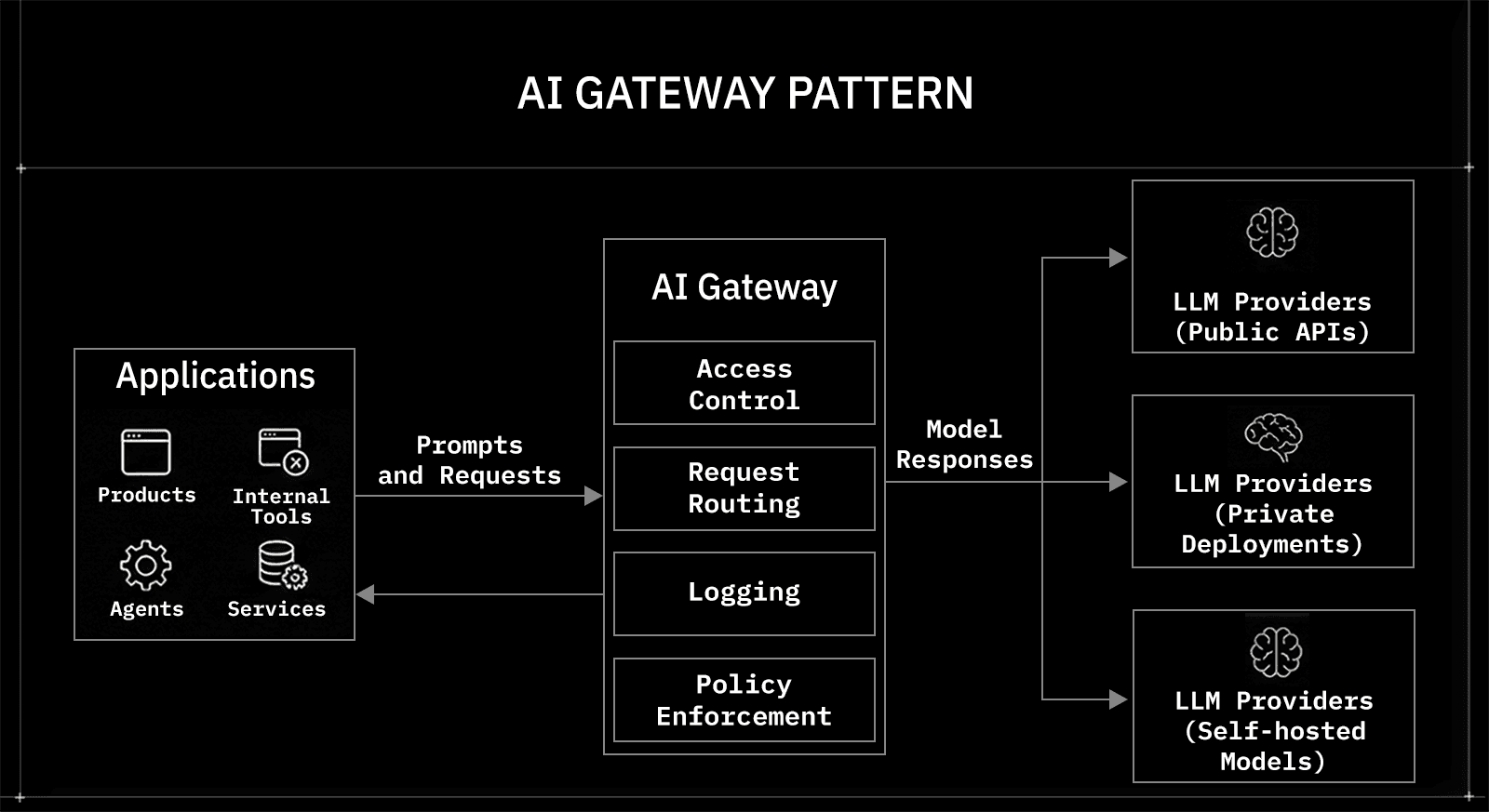
AI gateways sit between applications and AI model providers to control how requests flow. Applications send prompts and receive responses via the gateway rather than calling models directly. This gives teams a single place to manage routing, security, and usage policies.
In a typical setup, the architecture looks like this:
Applications: products, internal tools, agents, and services using AI
AI gateway: access control, request routing, logging, and policy enforcement
LLM providers: public APIs, private deployments, or self-hosted models
This structure separates responsibilities cleanly. Application teams focus on business logic. Model providers focus on inference and performance. The gateway enforces organizational rules across both. Without this layer, each application implements its own authentication, provider selection, and data-handling logic, leading to inconsistent and hard-to-audit code.
By centralizing these concerns, AI gateways turn fragmented integrations into a controlled system that can scale across teams and use cases.
What an AI Gateway Is Responsible For
AI gateways centralize responsibilities that would otherwise be duplicated across applications. When teams integrate models directly, each service ends up making its own decisions about routing, security, logging, and data handling. An AI gateway consolidates those decisions into a single shared layer.
In practice, a production-grade AI gateway is responsible for a small set of critical functions:
Request routing and abstraction: forwarding prompts to the right model based on policy, availability, or performance, without hard-coding providers into applications
Access and credential management: handling API keys, secrets, and authentication so applications never manage provider credentials directly
Security enforcement: applying encryption, isolation, and access controls consistently across all AI traffic
Visibility and auditability: capturing logs, metadata, and usage metrics in one place
These responsibilities are tightly coupled. Routing without security creates risk. Logging without policy enforcement creates noise. The value of an AI gateway lies in owning them all as a single control surface. This is what turns AI usage from scattered integrations into infrastructure that can be trusted at scale.
Why Security and Privacy Push Teams Toward AI Gateways
Security breaks first when AI usage grows without a gateway. Direct integrations send prompts and data straight from applications to external models, often with limited visibility into how that data is handled, stored, or logged. As more teams ship AI features, this creates blind spots that security and compliance teams cannot easily close.
AI gateways address this by enforcing security and privacy at a single choke point. Instead of trusting every application to “do the right thing,” the gateway applies the same guarantees to all traffic. Encryption can be enforced consistently. Access controls become uniform. Sensitive data handling stops depending on individual developer decisions.
This matters most in environments handling proprietary or regulated data. Logs, prompts, and responses need clear boundaries. Retention policies need to be provable. Audit trails need to be built in by design, not as an afterthought. AI gateways make these requirements enforceable at the infrastructure level, which is why security and privacy concerns are now the strongest drivers of adoption.
When an AI Gateway Becomes a Hard Requirement
AI gateways stop being optional once AI moves from isolated features to shared infrastructure. Early experiments can tolerate direct model calls. Production systems cannot. The shift usually happens quietly, then all at once.
Common signals show up first in operations and security:
Multiple models in use: different teams rely on different providers for cost, latency, or capability
Sensitive data in prompts: internal documents, customer records, or proprietary code flow through models
AI shared across teams: support, analytics, engineering, and ops reuse the same AI capabilities
Compliance pressure: audits, vendor reviews, or regulatory requirements enter the picture
At this stage, direct integrations create friction. Every new model requires duplicate reviews. Every security update requires coordinated changes across services. Visibility remains partial.
An AI gateway resolves this by creating a single enforcement point. Policies apply everywhere by default. Providers can change without rewriting applications. As AI becomes embedded across the organization, the gateway becomes the layer that keeps the system manageable rather than brittle.
OLLM: An Enterprise AI Gateway Built for Verifiable Privacy
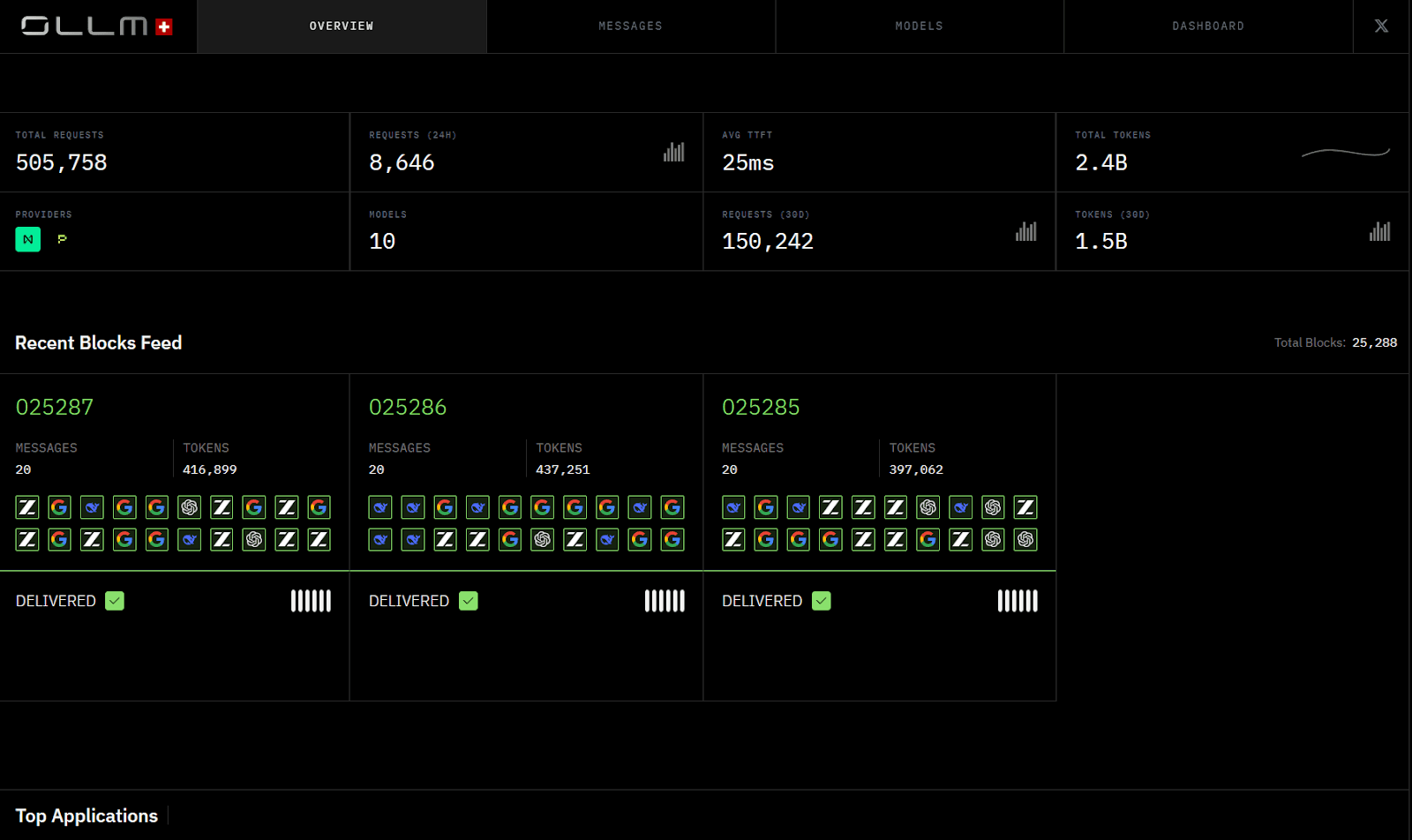
OLLM is an enterprise-focused AI gateway designed to route AI traffic through high-security LLM providers with strict zero-retention guarantees. Instead of exposing applications directly to external models, OLLM acts as a secure routing layer that enforces encryption, isolation, and governance by default.
At its core, OLLM aggregates dozens of AI models behind a single, OpenAI-compatible API. Applications integrate once and route all AI requests through OLLM. The gateway handles provider access, request forwarding, and security controls without requiring teams to embed provider credentials or model-specific logic into their applications. This keeps AI architecture stable as usage scales across teams.
Minimal Integration: OpenAI-Compatible by Design
OLLM is designed to be drop-in compatible with existing OpenAI-based applications. In most cases, adopting OLLM does not require rewriting prompts, changing SDKs, or modifying application logic. Teams simply update the API endpoint and replace their existing API key with an OLLM-issued key.
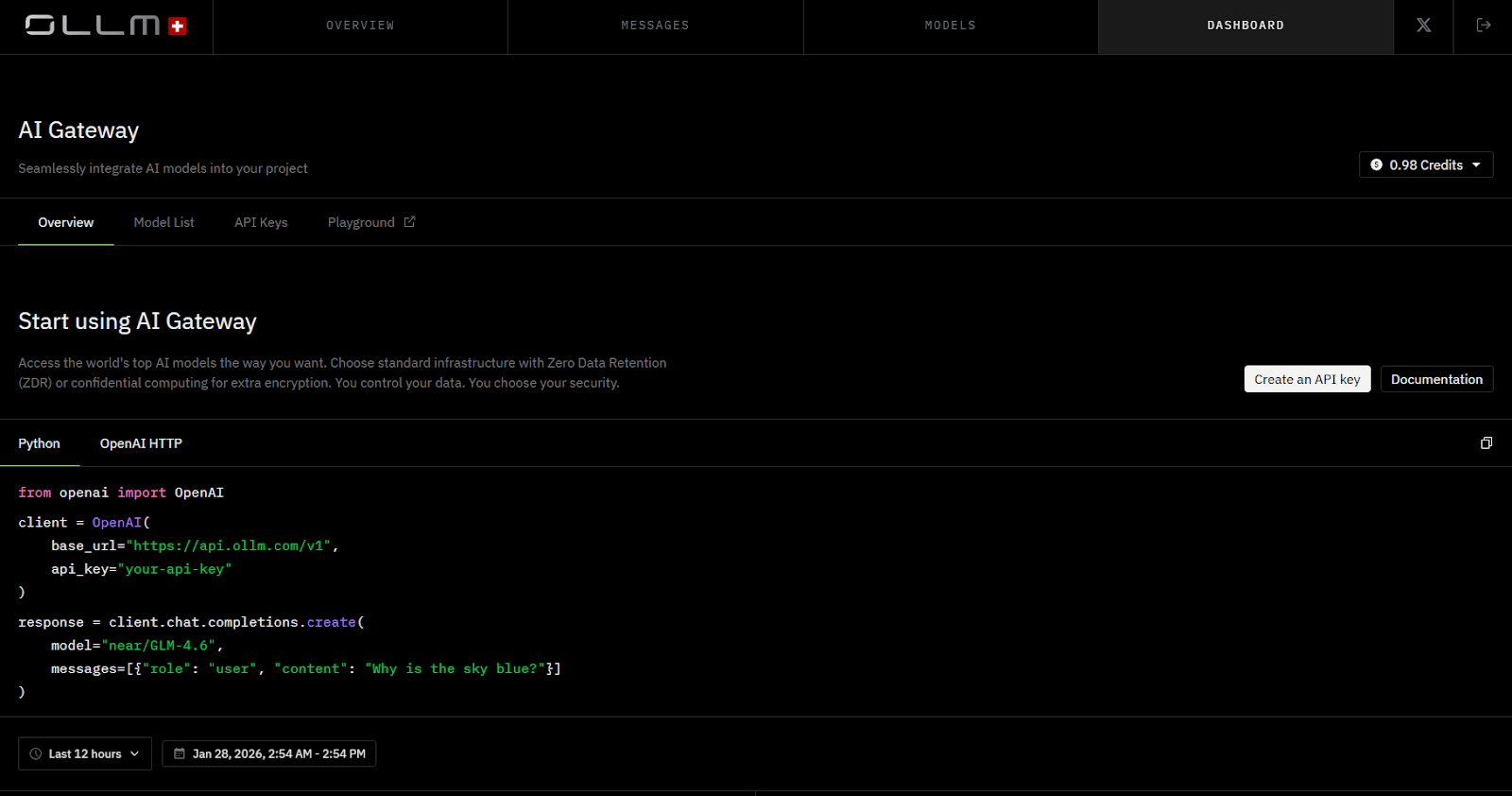
Because OLLM follows the OpenAI API format, existing tools, frameworks, and SDKs continue to work as-is. This enables the introduction of enterprise-grade security, zero data retention, and verifiable execution without disrupting developer workflows.
In practical terms, onboarding looks like this:
Change the API base URL to point to OLLM
Replace the API key with an OLLM-managed key
Keep the same request format, models, and client libraries
This approach lets teams adopt an AI gateway incrementally. Applications keep working. Security and governance improve immediately. No refactoring is required.
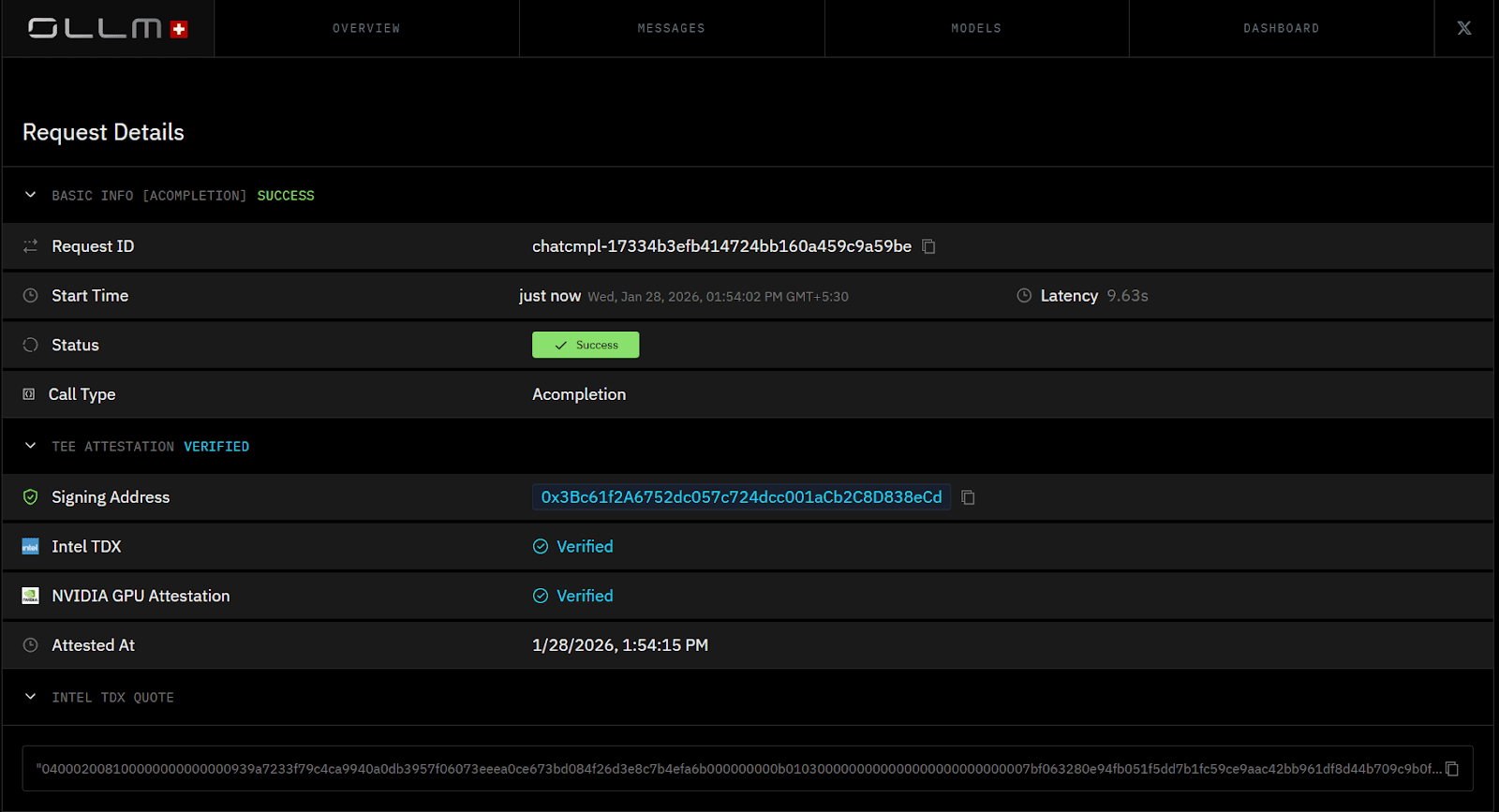
OLLM’s security model is built around verifiable execution and data handling:
Zero data retention, ensuring prompts and responses are not stored
Trusted Execution Environments (TEEs) for all model inference
Cryptographic attestation using Intel TDX and NVIDIA GPU attestation, which customers can independently verify
Strong isolation guarantees, preventing data leakage across providers and workloads
Strengths
Designed for production and security-sensitive environments
Verifiable privacy through hardware-backed execution
Access to many models through a single, stable API
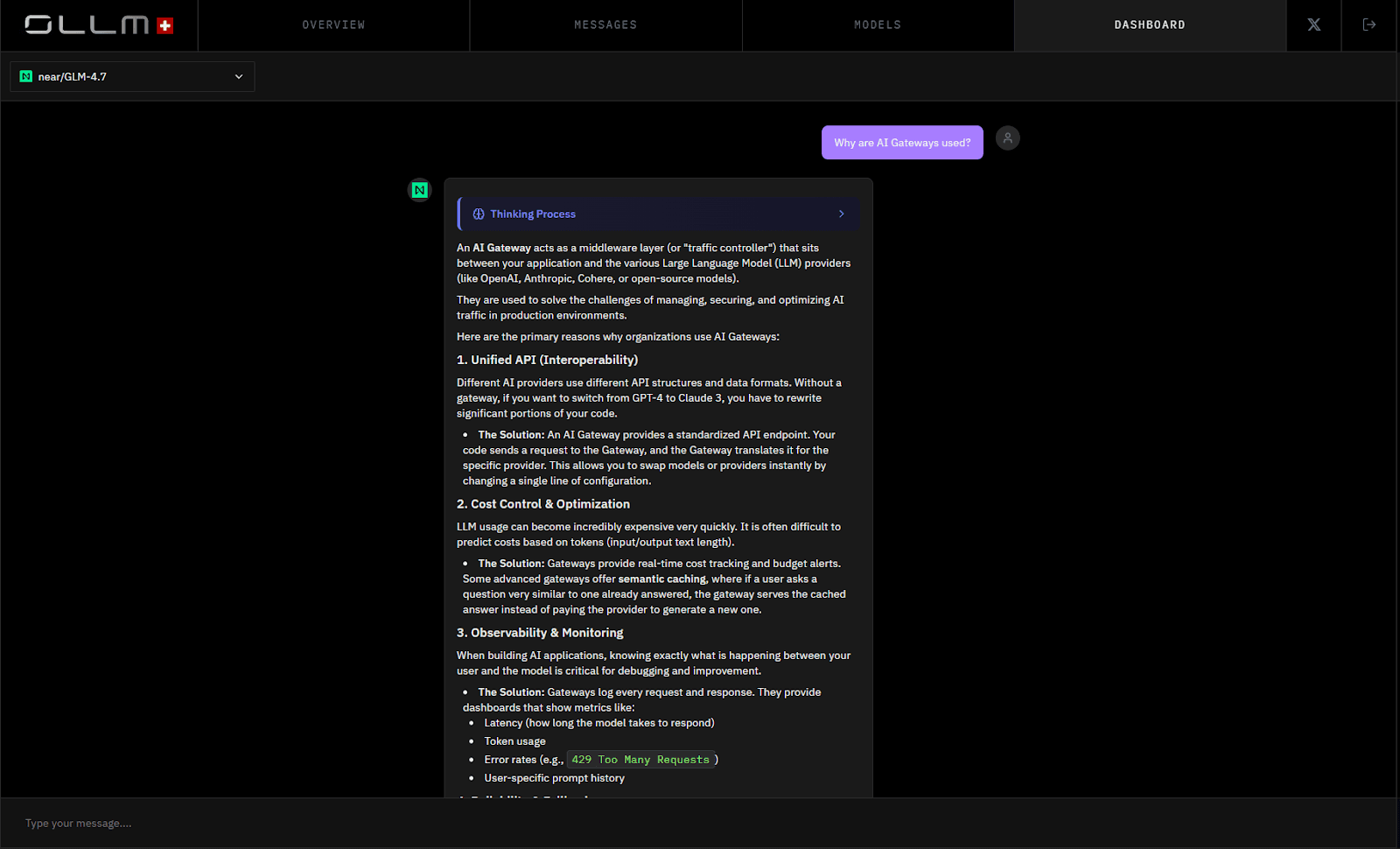
This design positions OLLM as infrastructure rather than tooling. Privacy, security, and verification are treated as first-class requirements, enforced at the execution layer rather than left to policy or trust alone.
How AI Gateways Reduce Vendor Lock-In While Increasing Control
AI gateways decouple applications from specific AI providers. Without a gateway, model choices are baked directly into application code. Switching providers means refactoring logic, updating credentials, and revalidating security assumptions across services. That friction quietly locks teams into early decisions.
A gateway removes this coupling by acting as an abstraction layer. Applications send requests to a stable interface. The gateway decides which model handles the request. Providers can change underneath without forcing changes upstream. This keeps architecture flexible as models, pricing, and capabilities evolve.
This control shows up in a few practical ways:
Provider portability: move between models based on cost, latency, or performance
Policy-driven routing: enforce rules without touching application code
Centralized negotiation leverage: avoid dependency on a single vendor
Future-proof architecture: adapt as the AI ecosystem changes
By separating application logic from provider decisions, AI gateways let teams adopt new models quickly while keeping operational control firmly centralized.
Why AI Gateways Are Becoming Core Infrastructure
AI gateways are no longer an optimization layer; they are becoming part of the base infrastructure for AI systems. As AI usage expands across teams and workflows, organizations need consistent controls that do not depend on individual applications or developers making the right choices.
The pattern mirrors earlier infrastructure shifts. APIs needed gateways once traffic, security, and governance became shared concerns. AI is following the same path. Models change quickly. Providers evolve. Regulatory expectations tighten. What stays constant is the need for a stable control layer that enforces how AI is accessed and used.
In practice, this means:
Security and privacy are enforced once, not reimplemented everywhere
Provider flexibility without architectural churn
Auditability and compliance are built into the system by default
As AI becomes embedded in core products and operations, gateways move from “nice to have” to foundational. They turn AI from a collection of external dependencies into a system that can be governed, trusted, and scaled over time.
Conclusion: AI Gateways Turn AI Usage Into Trustworthy Infrastructure
AI gateways exist to solve the structural problems that appear when AI moves into production. They centralize access, enforce security and privacy, and give organizations control over how models are used across teams and systems. Instead of fragmented integrations and implicit trust, gateways introduce a clear control layer that makes AI auditable, governable, and scalable. As AI becomes embedded in core products and operations, this layer stops being optional and starts defining whether AI systems can be trusted long term.
Teams building with sensitive data or operating at scale should evaluate AI gateways early. If privacy, verification, and provider flexibility matter, platforms like OLLM are designed specifically for that reality. With zero data retention, hardware-backed execution, and verifiable attestation, OLLM enables AI adoption without compromising control. Exploring an AI gateway is no longer about optimization; it is about setting the right foundation before AI becomes impossible to unwind.
FAQ
1. What is the difference between an AI gateway and direct LLM API integration?
An AI gateway adds a control layer between applications and LLM providers. While direct LLM API integration connects services straight to a model, an AI gateway centralizes security, access control, logging, and governance. This makes AI usage auditable, provider-agnostic, and easier to manage at scale.
2. Do AI gateways slow down LLM inference or increase latency?
Modern AI gateways are designed to minimize overhead. In most cases, the latency added by a gateway is negligible compared to network and inference time. The trade-off favors consistency, security, and visibility, especially for production workloads that use multiple AI models.
3. How does OLLM handle data privacy and zero data retention?
OLLM enforces zero data retention by design. Prompts and responses are not stored, logged, or reused. All model execution occurs within Trusted Execution Environments (TEEs), with cryptographic attestation via Intel TDX and NVIDIA GPU attestation that customers can independently verify.
4. Can OLLM be used with multiple AI models through a single API?
Yes. OLLM aggregates dozens of AI models behind a single OpenAI-compatible API. Applications integrate once and gain access to multiple providers without embedding model-specific logic or credentials. This simplifies AI architecture and reduces long-term vendor lock-in.
5. When should an enterprise adopt an AI gateway?
An AI gateway becomes necessary once AI is used across teams, involves sensitive data, or relies on multiple model providers. Organizations facing security reviews, compliance requirements, or scaling AI workloads typically adopt an AI gateway to enforce consistent policies and maintain architectural control.
"/><stop offset="1" stop-color="rgb(80, 78, 87)"/></linearGradient></defs><g d="M 28.559 14.287 C 28.559 15.87 28.009 17.216 26.893 18.333 C 25.784 19.441 24.431 20 22.849 20 L 5.879 20 C 4.342 20 2.828 19.449 1.727 18.378 C 1.169 17.835 0.757 17.239 0.466 16.581 L 22.773 16.581 C 23.269 16.581 23.774 16.39 24.11 16.023 C 24.408 15.694 24.561 15.304 24.561 14.86 L 24.561 10.233 C 24.561 8.023 26.35 6.233 28.559 6.233 L 28.559 14.286 Z M 40.856 0.469 C 40.908 0.469 40.947 0.488 40.973 0.527 C 41.012 0.553 41.031 0.592 41.031 0.644 L 41.031 14.98 C 41.031 15.436 41.194 15.833 41.52 16.172 C 41.845 16.497 42.242 16.66 42.711 16.66 L 64.85 16.66 C 64.889 16.66 64.921 16.68 64.947 16.718 C 64.986 16.745 65.006 16.777 65.006 16.816 L 65.006 19.844 C 65.006 19.883 64.986 19.922 64.947 19.961 C 64.921 19.987 64.886 20.001 64.85 20 L 42.711 20 C 41.162 20 39.841 19.459 38.747 18.379 C 37.667 17.285 37.127 15.963 37.127 14.414 L 37.127 0.645 C 37.127 0.592 37.14 0.553 37.166 0.527 C 37.205 0.488 37.244 0.469 37.283 0.469 L 40.856 0.469 Z M 75.049 0.469 C 75.1 0.469 75.14 0.488 75.166 0.527 C 75.204 0.553 75.224 0.592 75.224 0.644 L 75.224 14.98 C 75.224 15.436 75.387 15.833 75.712 16.172 C 76.038 16.497 76.435 16.66 76.903 16.66 L 99.042 16.66 C 99.081 16.66 99.114 16.679 99.14 16.718 C 99.179 16.745 99.198 16.777 99.198 16.816 L 99.198 19.844 C 99.198 19.883 99.179 19.922 99.14 19.961 C 99.114 19.987 99.078 20.001 99.042 20 L 76.903 20 C 75.354 20 74.033 19.459 72.94 18.379 C 71.86 17.285 71.319 15.963 71.319 14.414 L 71.319 0.645 C 71.319 0.593 71.332 0.553 71.358 0.527 C 71.397 0.488 71.437 0.469 71.476 0.469 L 75.049 0.469 Z M 128.939 0.469 C 130.488 0.469 131.803 1.015 132.883 2.109 C 133.976 3.203 134.523 4.518 134.523 6.054 L 134.523 19.844 C 134.523 19.883 134.503 19.922 134.465 19.961 C 134.439 19.987 134.399 20 134.347 20 L 130.774 20 C 130.735 20 130.696 19.987 130.657 19.961 C 130.633 19.926 130.619 19.886 130.618 19.844 L 130.618 5.488 C 130.618 5.033 130.456 4.642 130.13 4.316 C 129.805 3.991 129.408 3.828 128.939 3.828 L 121.97 3.828 L 121.97 19.844 C 121.97 19.883 121.95 19.922 121.911 19.961 C 121.885 19.987 121.846 20 121.794 20 L 118.241 20 C 118.189 20 118.143 19.987 118.104 19.961 C 118.079 19.927 118.066 19.886 118.065 19.844 L 118.065 3.828 L 111.095 3.828 C 110.627 3.828 110.23 3.991 109.904 4.316 C 109.579 4.642 109.416 5.033 109.416 5.488 L 109.416 19.844 C 109.416 19.883 109.397 19.922 109.358 19.961 C 109.332 19.987 109.297 20.001 109.26 20 L 105.688 20 C 105.639 20.001 105.592 19.987 105.551 19.961 C 105.527 19.927 105.513 19.886 105.512 19.844 L 105.512 6.055 C 105.512 4.518 106.058 3.203 107.152 2.109 C 108.245 1.016 109.56 0.469 111.095 0.469 L 128.939 0.469 Z M 22.849 0 C 24.431 0 25.777 0.551 26.893 1.667 C 27.42 2.195 27.825 2.784 28.101 3.418 L 5.718 3.418 C 5.252 3.418 4.854 3.594 4.51 3.931 C 4.166 4.267 3.998 4.673 3.998 5.14 L 3.998 9.767 C 3.998 11.977 2.209 13.767 0 13.767 L 0.008 13.759 L 0.008 5.714 C 0.008 4.069 0.612 2.685 1.812 1.545 C 2.89 0.528 4.334 0 5.817 0 Z M 142.346 0.381 L 162 0.381 L 162 20 L 142.346 20 Z M 153.986 8.381 L 158.375 8.381 L 158.375 12 L 153.986 12 L 153.986 16.571 L 150.36 16.571 L 150.36 12 L 145.972 12 L 145.972 8.381 L 150.36 8.381 L 150.36 4.19 L 153.986 4.19 Z" fill="transparent" height="20px" id="cWM2PbaAz" width="162.00000833847133px"><path d="M 28.559 14.287 C 28.559 15.87 28.009 17.216 26.893 18.333 C 25.784 19.441 24.431 20 22.849 20 L 5.879 20 C 4.342 20 2.828 19.449 1.727 18.378 C 1.169 17.835 0.757 17.239 0.466 16.581 L 22.773 16.581 C 23.269 16.581 23.774 16.39 24.11 16.023 C 24.408 15.694 24.561 15.304 24.561 14.86 L 24.561 10.233 C 24.561 8.023 26.35 6.233 28.559 6.233 L 28.559 14.286 Z M 40.856 0.469 C 40.908 0.469 40.947 0.488 40.973 0.527 C 41.012 0.553 41.031 0.592 41.031 0.644 L 41.031 14.98 C 41.031 15.436 41.194 15.833 41.52 16.172 C 41.845 16.497 42.242 16.66 42.711 16.66 L 64.85 16.66 C 64.889 16.66 64.921 16.68 64.947 16.718 C 64.986 16.745 65.006 16.777 65.006 16.816 L 65.006 19.844 C 65.006 19.883 64.986 19.922 64.947 19.961 C 64.921 19.987 64.886 20.001 64.85 20 L 42.711 20 C 41.162 20 39.841 19.459 38.747 18.379 C 37.667 17.285 37.127 15.963 37.127 14.414 L 37.127 0.645 C 37.127 0.592 37.14 0.553 37.166 0.527 C 37.205 0.488 37.244 0.469 37.283 0.469 L 40.856 0.469 Z M 75.049 0.469 C 75.1 0.469 75.14 0.488 75.166 0.527 C 75.204 0.553 75.224 0.592 75.224 0.644 L 75.224 14.98 C 75.224 15.436 75.387 15.833 75.712 16.172 C 76.038 16.497 76.435 16.66 76.903 16.66 L 99.042 16.66 C 99.081 16.66 99.114 16.679 99.14 16.718 C 99.179 16.745 99.198 16.777 99.198 16.816 L 99.198 19.844 C 99.198 19.883 99.179 19.922 99.14 19.961 C 99.114 19.987 99.078 20.001 99.042 20 L 76.903 20 C 75.354 20 74.033 19.459 72.94 18.379 C 71.86 17.285 71.319 15.963 71.319 14.414 L 71.319 0.645 C 71.319 0.593 71.332 0.553 71.358 0.527 C 71.397 0.488 71.437 0.469 71.476 0.469 L 75.049 0.469 Z M 128.939 0.469 C 130.488 0.469 131.803 1.015 132.883 2.109 C 133.976 3.203 134.523 4.518 134.523 6.054 L 134.523 19.844 C 134.523 19.883 134.503 19.922 134.465 19.961 C 134.439 19.987 134.399 20 134.347 20 L 130.774 20 C 130.735 20 130.696 19.987 130.657 19.961 C 130.633 19.926 130.619 19.886 130.618 19.844 L 130.618 5.488 C 130.618 5.033 130.456 4.642 130.13 4.316 C 129.805 3.991 129.408 3.828 128.939 3.828 L 121.97 3.828 L 121.97 19.844 C 121.97 19.883 121.95 19.922 121.911 19.961 C 121.885 19.987 121.846 20 121.794 20 L 118.241 20 C 118.189 20 118.143 19.987 118.104 19.961 C 118.079 19.927 118.066 19.886 118.065 19.844 L 118.065 3.828 L 111.095 3.828 C 110.627 3.828 110.23 3.991 109.904 4.316 C 109.579 4.642 109.416 5.033 109.416 5.488 L 109.416 19.844 C 109.416 19.883 109.397 19.922 109.358 19.961 C 109.332 19.987 109.297 20.001 109.26 20 L 105.688 20 C 105.639 20.001 105.592 19.987 105.551 19.961 C 105.527 19.927 105.513 19.886 105.512 19.844 L 105.512 6.055 C 105.512 4.518 106.058 3.203 107.152 2.109 C 108.245 1.016 109.56 0.469 111.095 0.469 L 128.939 0.469 Z M 22.849 0 C 24.431 0 25.777 0.551 26.893 1.667 C 27.42 2.195 27.825 2.784 28.101 3.418 L 5.718 3.418 C 5.252 3.418 4.854 3.594 4.51 3.931 C 4.166 4.267 3.998 4.673 3.998 5.14 L 3.998 9.767 C 3.998 11.977 2.209 13.767 0 13.767 L 0.008 13.759 L 0.008 5.714 C 0.008 4.069 0.612 2.685 1.812 1.545 C 2.89 0.528 4.334 0 5.817 0 Z" fill="url(%23UyELkL66Q-1582027827-linear-gradient)" height="20px" id="UyELkL66Q" width="134.52277004415487px"/><path d="M 0 0 L 19.654 0 L 19.654 19.619 L 0 19.619 Z" fill="rgb(176, 0, 0)" height="19.618991595424752px" id="t30DbKa7C" transform="translate(142.346 0.381)" width="19.653710120697895px"/><path d="M 8.014 4.19 L 12.403 4.19 L 12.403 7.81 L 8.014 7.81 L 8.014 12.381 L 4.389 12.381 L 4.389 7.81 L 0 7.81 L 0 4.19 L 4.389 4.19 L 4.389 0 L 8.014 0 Z" fill="rgb(255, 255, 255)" height="12.380917026238919px" id="bLcZkJmGc" transform="translate(145.972 4.19)" width="12.402826775197639px"/></g></svg>)